
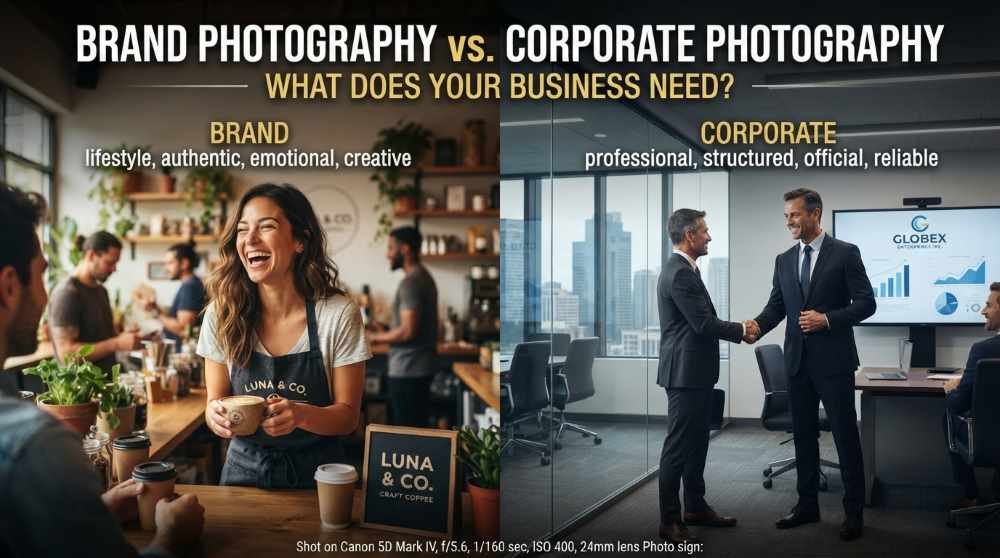
Your business needs new photos, but what should you book: brand photography, corporate photography, or a combination of both?
The answer starts with what your images need to communicate. A potential customer visiting your website may want to see who they will work with, understand your services, or get a sense of your company’s personality. Different photographs help answer each of those questions.
Brand photography focuses on communicating your business’s identity, personality, and customer experience. Corporate photography focuses on presenting your people, operations, and organization professionally. The two often overlap, and a well-planned session can serve both purposes.
For North Dakota businesses, choosing the right approach means looking beyond the label and planning images around your audience, marketing channels, and business goals.
What Is Brand Photography?
Brand photography is a collection of images created to express what makes your business recognizable. It connects your visual identity with the people, places, products, and experiences behind your company.
A brand photography session might include portraits, but it usually goes further. The goal is to help customers understand what working with your business looks and feels like.
Typical brand photography includes:
- Business owners and employees in their working environment.
- Behind-the-scenes moments that show your process.
- Customer interactions and service experiences.
- Products being used in realistic settings.
- Workspace details, materials, tools, and branded elements.
- Images composed specifically for website banners, email campaigns, and social media.
For example, a Fargo design studio might photograph its team reviewing samples, discussing ideas with clients, and working through a project. Together, those photographs communicate the studio’s approach and personality more fully than individual headshots alone.
Brand photography can be warm and relaxed, precise and technical, or polished and understated. The style should reflect the business and the customers it wants to reach.
What Is Corporate Photography?
Corporate photography covers images that represent a company, its workforce, and its activities in professional communications.
Headshots are a familiar example, but corporate photography can also document leadership, workplaces, company events, and daily operations. These images help an organization present itself consistently to customers, employees, business partners, and other audiences.
Common corporate photography subjects include:
- Employee headshots and executive portraits.
- Department and company team photos.
- Office interiors and business facilities.
- Employees collaborating or performing their roles.
- Conferences, presentations, and company events.
- Images for recruitment materials, company profiles, and reports.
A Bismarck professional services firm, for example, might need matching staff portraits for its website, a leadership group photograph for a company announcement, and workplace images for its careers page.
Corporate photography does not have to look stiff or overly formal. Expressions, clothing, lighting, and locations can be adjusted to match the organization while maintaining a consistent presentation.
Brand Photography vs. Corporate Photography: Key Differences
These terms are not rigid categories. Photographers may define their services differently, so the agreed shot list matters more than the package name.
| Consideration | Brand photography | Corporate photography |
|---|---|---|
| Main purpose | Communicate identity, personality, and customer experience | Present the company, its people, and activities professionally |
| Typical subjects | People at work, service interactions, products in use, and meaningful details | Headshots, leadership, teams, facilities, and company events |
| Visual direction | Shaped by brand positioning and the story being told | Shaped by company standards and communication needs |
| Common uses | Website storytelling, campaigns, social media, and service pages | Staff directories, recruitment, company profiles, presentations, and reports |
| Planning priorities | Audience, brand qualities, locations, and marketing messages | Employee schedules, consistency, required roles, and organizational coverage |
| Useful result | A varied collection that makes the business recognizable | A coordinated collection that represents the organization clearly |
The distinction is about emphasis. A photograph of an employee helping a customer may support both brand storytelling and corporate communications.
When Does Your Business Need Brand Photography?
Brand photography is particularly useful when your marketing needs to explain your business beyond its name and service list.
Your Website Does Not Show What Makes You Different
If your website relies on generic office photos, visitors may struggle to understand your actual business.
Original brand images can show your team’s approach, your working environment, and the details customers experience. For a service company, that might mean photographing preparation, consultation, and the completed work.
The most useful images support specific claims. If your message is personal service, show a real consultation. If it is careful craftsmanship, show the process and finished details.
You Are Launching or Repositioning Your Business
A new website, service, location, or visual identity can create a need for a fresh image collection.
Planning photography alongside the website design helps you capture the right compositions. A homepage banner may need a wide photograph with clear space for text, while a service page may need close-up images explaining the work.
Your Marketing Needs More Variety
Repeatedly using the same headshot or team photo limits what you can communicate.
A brand session can provide several types of content: people, processes, environments, products, and details. This gives you more relevant options for newsletters, website updates, and social posts without relying on unrelated imagery.
When Does Your Business Need Corporate Photography?
Corporate photography is a strong fit when the immediate priority is an accurate, consistent presentation of your organization.
Your Team Photos Look Inconsistent
A staff page can feel disconnected when some employees have studio portraits, others have cropped event photos, and newer team members have no photograph.
A coordinated headshot session creates a common approach to lighting, background, framing, and editing. Recording those choices also makes it easier to photograph future hires in a compatible style.
Your Leadership Needs Professional Images
Executives and company representatives may need photographs for speaker biographies, announcements, proposals, and media requests.
A useful leadership session can include a straightforward headshot and an environmental portrait. That gives your team options for both small profile placements and larger editorial layouts.
You Need Recruitment and Company Communications
Prospective employees want to understand the workplace and the people behind the job description.
Corporate photography can show collaboration, workspaces, training, and relevant facilities. Plan these images around actual roles and environments so they accurately represent your company.
Can You Combine Brand and Corporate Photography?
Yes. Combining the two can make sense when you need both consistent portraits and a broader collection of marketing images.
Consider a North Dakota construction company updating its website. Its photography plan might include:
- Leadership headshots for the About page.
- A team photograph for recruitment materials.
- Employees reviewing project plans.
- Worksite images showing the company’s process.
- Equipment and workmanship details.
- Completed project photographs for service pages.
The portraits support the company’s professional presentation. The process and project images help explain its work and character.
A combined session still needs realistic scheduling. Photographing a large team, moving between locations, and documenting operations may require more than one shoot day. Give priority images dedicated time instead of treating them as extras.
How to Choose the Right Photography for Your Business
Before contacting a photographer, answer three questions.
1. What Do Visitors Need to Understand?
Think about the questions your images should answer:
- Who will I work with?
- What does this company do?
- What is the experience like?
- Does this business have the people and facilities for my project?
- What makes its approach distinctive?
If the main gap is identifying your people, start with corporate portraits. If the gap is explaining your experience and personality, prioritize brand photography. If both are missing, build a combined brief.
2. Where Will the Photos Appear?
List the actual placements before creating the shot list.
Website headers often need different compositions from profile pictures. A vertical social post may need a separate frame from a horizontal brochure image. Recruitment pages may need workplace scenes that a standard headshot session will not cover.
Share website layouts or sample placements with your photographer so the images fit their intended use.
3. Which Images Matter Most Right Now?
For a limited budget, prioritize the photos needed for your next business milestone.
A website launch might require a homepage image, owner portrait, team photo, and a few service images. A company announcement might need only updated leadership portraits.
Ask the photographer to quote a defined scope. Useful comparisons include planning, shoot time, locations, final image count, retouching, delivery formats, and agreed usage.
Planning a Photography Session in North Dakota
Location and scheduling should support the work you need to show.
An office-based business may be able to capture portraits and workplace scenes in one location. A manufacturer, agricultural business, or construction company may need photography across facilities or outdoor sites.
For outdoor work, discuss weather alternatives, seasonal appearance, available daylight, and travel between locations. For active workplaces, coordinate access, required protective equipment, and an appropriate employee contact.
Prepare the spaces that will appear in photographs. Remove unnecessary clutter, check visible signage, and keep private information out of view on screens and documents.
Your brief should also explain the qualities you want the photographs to convey. Words such as approachable, precise, practical, or creative are more useful when paired with examples of real activities that demonstrate them.
Frequently Asked Questions
Is brand photography the same as corporate headshots?
No. Corporate headshots focus on individual portraits. Brand photography typically includes a wider collection of people, environments, processes, and details. Headshots can be included in a brand session.
Is corporate photography only for large companies?
No. Small businesses can use corporate photography for staff portraits, team photos, company profiles, and recruitment. The scope should reflect the business’s needs, regardless of its size.
Can corporate photography look natural?
Yes. Corporate images can use relaxed expressions, workplace settings, and real activities. A professional presentation does not require every photograph to be formal or posed.
Which type of photography costs more?
Neither is automatically more expensive. Cost depends on the project’s scope, including preparation, employee count, locations, production needs, editing, and usage. Compare quotes against the same brief.
How often should business photos be updated?
Update them when they no longer accurately represent your team, location, services, or brand. Review your image collection before a website redesign, major campaign, or important company announcement.
Do I need both for my business website?
You may benefit from both if your website needs clear staff portraits as well as images that explain your services and customer experience. A smaller website may only need a focused collection that covers those essential uses.
Plan Photos Around Your Business Goals
Choosing between brand photography and corporate photography starts with the job your images need to do.
Corporate photography helps people see your team and organization clearly. Brand photography helps them understand your personality, approach, and customer experience. Together, they can give your website and marketing a more complete picture of your business.
Before booking a session, identify your priority pages, list the images they need, and share those requirements with your photographer. For your North Dakota business, the right starting point is a clear brief that connects every photograph to a real communication goal.