
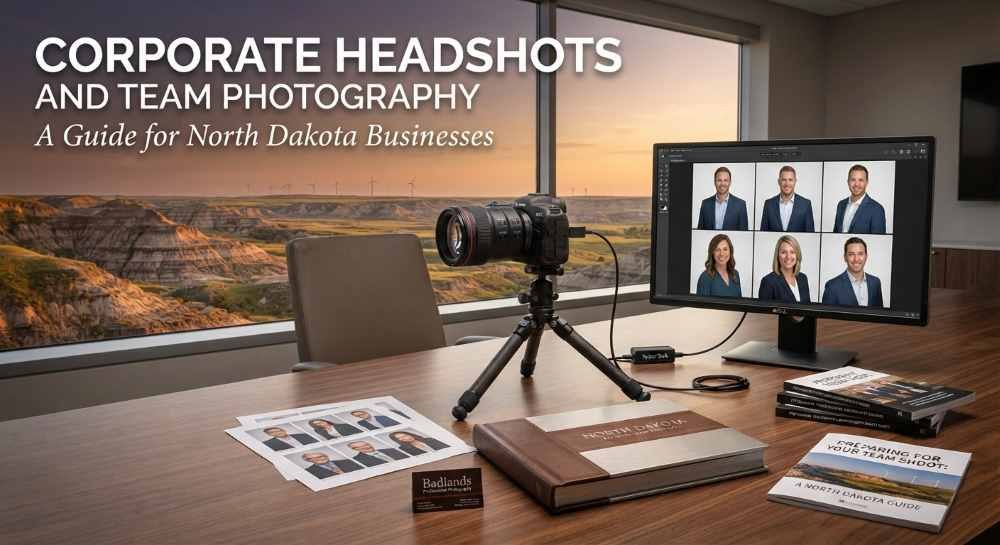
Before a prospective client calls your office, they may already have visited your team page. The photos they find introduce the people behind your business: the advisor they might hire, the project manager they will work with, or the leadership team guiding the company.
Corporate headshots and team photography help North Dakota businesses make that introduction clear, professional, and personal. Whether you run a professional services firm in Fargo, a healthcare practice in Bismarck, or a construction company serving western North Dakota, your images should reflect how your people actually work.
A successful session starts with more than choosing a background. You need a consistent style, a workable schedule, and photographs suited to your website, employee profiles, proposals, and recruiting materials. This guide explains how to plan each part.
What Is the Difference Between Corporate Headshots and Team Photography?
Corporate headshots focus on individuals, usually with a close crop showing the face and shoulders. They help clients and colleagues recognize a specific person and are commonly used on staff biographies, LinkedIn profiles, speaker announcements, and email signatures.
Team photography shows people together. It can include a formal company portrait, smaller department groups, or employees collaborating in a real work environment.
Environmental portraits sit between the two: they photograph an individual with more of their surroundings visible. An architect in a design studio or a project manager at a completed building gives viewers context about that person’s role.
Many businesses benefit from a combination. Individual portraits introduce each employee, group photographs show the organization, and workplace images help explain what the business does.
Choose a Photography Style That Fits Your Business
The right style should suit your brand and the people you serve. A financial advisory firm’s portraits may look different from those of a creative studio or an agricultural equipment business.
Studio-Style Headshots
A simple backdrop and controlled lighting create a clean, consistent appearance. This approach works well for staff directories and businesses that need to photograph new employees throughout the year.
A studio-style look does not always require a studio visit. Ask whether the photographer can bring a portable setup to your office and how much space it requires.
Environmental Business Portraits
Photographs taken in an office, workshop, showroom, or other relevant location connect your people with their work. Choose a setting that adds useful context without competing with the person’s face.
Check the background for clutter, confidential information, distracting signs, and reflections before the session.
Formal and Candid Team Photos
A formal group portrait gives your website a clear image of the team. Smaller groups and natural workplace photographs can add variety to recruiting pages, presentations, and social posts.
For workplace images, plan around real activities such as reviewing drawings or discussing a project. Give employees something meaningful to do so the photographs feel believable.
Planning a Headshot Session in North Dakota
Location, travel, and weather deserve attention before you set the schedule.
For a business with staff in Fargo, Grand Forks, and Bismarck, one photography day may only be practical if everyone is already gathering for a meeting. Otherwise, separate sessions with a shared lighting and background plan may be easier to manage.
Businesses serving Minot, Dickinson, Williston, or rural communities should clarify travel arrangements and site access when requesting a quote. The photographer needs to know whether the session is at a downtown office, a remote facility, or multiple locations.
Outdoor portraits can provide a distinctive setting, but wind, cold, and changing light can affect employee comfort and consistency. Reserve an indoor option and agree on when a weather-related decision will be made.
At industrial and construction locations, coordinate with the site manager. Photography should fit around operational requirements, required protective equipment, and approved access areas.
Build a Shot List Around How You Will Use the Photos
Start with the final use of the images. A tightly cropped LinkedIn portrait and a wide website banner require different compositions.
A practical business photography shot list might include:
- One consistent headshot of each employee for the team page.
- Additional leadership portraits for press and speaking opportunities.
- A full-team photograph and selected department groups.
- Horizontal workplace images for website sections and recruitment.
- A few vertical images for mobile layouts and social posts.
Share your website layout or sample image dimensions with the photographer. If a banner needs space for a headline, request that composition during the session. It is easier to leave useful space when shooting than to force a close portrait into a wide layout later.
Identify the essential images first. This protects your priorities if a meeting runs late or an employee becomes unavailable.
What Should Employees Wear for Corporate Headshots?
Choose clothing that reflects how employees normally present themselves to clients. Professional does not have to mean identical suits.
For a business casual team, shirts, blouses, sweaters, and jackets can work together without everyone matching. For field employees, clean company workwear may represent the business more accurately.
Send a short clothing guide before the session:
- Choose well-fitting, freshly pressed clothing.
- Favor solid colors or subtle patterns.
- Avoid prominent logos unless they are part of company branding.
- Coordinate clothing with the planned background.
- Bring a second top or jacket if you want options.
- Wear your usual glasses so the portrait remains recognizable.
For group photographs, suggest a compatible color range instead of requiring everyone to wear one exact shade. Ask the photographer for examples that suit your brand colors and location.
Make Photography Day Comfortable and Efficient
Many employees feel awkward in front of a camera. Clear instructions and an unhurried experience can make the session easier.
Explain where to go, what to wear, how the images will be used, and how selections will work. Choose a room with enough space for equipment and some privacy, rather than placing the setup in a busy walkway.
Ask the photographer to recommend appointment lengths based on the session format. A straightforward staff portrait needs a different schedule from an executive session with several outfits and locations.
For example, photographing 20 employees in 10-minute appointments uses 200 minutes before setup, breaks, group photos, or delays. Build the schedule around the actual scope rather than assuming the entire team can be finished in an hour.
Assign one coordinator to manage arrivals and questions. Schedule the full-team photograph for a time when everyone can attend, and leave space for late arrivals or retakes.
How Much Does Corporate Headshot Photography Cost?
Corporate headshot pricing depends on the assignment. A single person’s studio appointment and an on-site session covering multiple departments involve different work.
When comparing quotes, check:
- The number of employees and locations included.
- Photography time, setup, and travel charges.
- The number of finished photographs per person.
- Whether selection galleries and retouching are included.
- Whether group photos and workplace images are additional.
- Delivery timing and any rush charges.
- The agreed business uses of the photographs.
- How future employee sessions will be priced.
Ask for a written breakdown based on the same shot list. A lower session fee may include fewer finished images or a narrower scope, making headline prices difficult to compare.
Describe your intended uses clearly, including website pages, employee LinkedIn profiles, recruitment, print materials, and advertising. Have the photographer specify what is included in the agreement.
How to Choose a Corporate Photographer
Look for consistency across an entire team, not only a few standout portraits. A useful portfolio should show clear faces, flattering lighting, natural expressions, and careful treatment of different skin tones, hairstyles, and glasses.
Ask how the photographer guides people who dislike having their picture taken. Posing direction and communication matter when employees have limited time and different comfort levels.
Before booking, discuss these questions:
- Can you show a complete staff photography assignment?
- Can you match this look for future employees?
- What room size and setup time do you need?
- How are image selections and approvals handled?
- What does standard retouching include?
- When will the finished files arrive?
- What happens if employees miss the session?
Retouching should support a recognizable appearance. Agree on preferences for temporary blemishes, stray hairs, clothing distractions, and skin texture before editing begins.
Keep Staff Photos Consistent as Your Team Grows
Create a simple reference guide after the first session. Record the background, lighting style, framing, camera height, clothing guidance, and editing preferences. Save an approved portrait as a visual reference.
This is especially useful for businesses with several North Dakota offices or frequent new hires. A repeatable setup makes future portraits easier to integrate into the same team page.
Keep individual portraits even if you feature a large group photograph. Staff changes are easier to manage when your website does not depend on one group image staying current.
Review photos when employees join, change roles, or no longer resemble their existing portrait. Update group images when they no longer accurately represent the team.
Prepare Your Photos for Your Website and Marketing
Request high-resolution files for print and appropriately sized versions for the web. Keep the originals organized separately so later projects are not limited to small website copies.
Use consistent crops on staff pages and check how portraits appear on mobile screens. Leave enough space around faces for circular profile crops where needed.
Give files descriptive names, such as jane-smith-headshot.jpg. Where an image needs alternative text, describe it naturally and in context—for example, “Jane Smith, project manager.” Avoid filling image descriptions with repeated location keywords.
Store approved photographs in a shared folder with employee names and session dates. One organized collection helps your website, proposals, and social profiles use the same current images.
Frequently Asked Questions
Can corporate headshots be taken at our office?
Yes, if the photographer offers an on-site setup and your office has suitable space. Confirm room dimensions, background options, equipment access, and setup time before booking.
Should everyone have the same background?
A shared background makes a staff directory look consistent. Leadership portraits and workplace photographs can use other settings while maintaining a similar overall editing style.
Can we combine headshots and team photography in one session?
Yes. Include both in the original brief so the photographer can allow time for lighting changes, group arrangements, and individual appointments.
How often should a business update headshots?
Update portraits when they no longer reflect an employee’s appearance or your company’s branding. Review the collection periodically and arrange photographs for new hires as needed.
Are indoor or outdoor headshots better in North Dakota?
Indoor sessions offer more control over lighting and scheduling. Outdoor portraits can work well when the setting supports your brand, but they need a weather backup and a plan for matching future photographs.
Plan a Session That Works Beyond Photo Day
The most useful corporate headshots and team photographs are the ones your business can use consistently. They introduce your staff, fit your marketing materials, and remain manageable as your organization changes.
Before requesting a North Dakota business photography quote, prepare your employee count, location, preferred style, essential shot list, and deadline. A clear brief gives the photographer what they need to propose a session that fits your team and your business goals.